


FOG Management for Restaurants in India
When Grease Becomes a Nightmare
It’s the evening of a high-profile Diwali banquet. Your kitchen is running at full throttle, churning out batches of butter chicken, tandoori preparations, and rich biryanis. Then it happens, the floor drain backs up. Greasy water floods the prep area. The stench is unbearable. Your head chef is shouting. Guests are waiting. And somewhere in the back of your mind, you’re calculating the cost: emergency plumber fees, lost reservations, potential health violations, and the dreaded municipal fine that could reach ₹50,000 or more.
This isn’t a hypothetical scenario. It’s the reality facing hundreds of Indian restaurant owners who underestimate the silent killer of commercial kitchens: FOG, Fats, Oils, and Grease.
In a country where ghee flows freely, where every dal tadka is perfected with a generous pour of oil, and where rich gravies define culinary excellence, Biological FOG management isn’t optional. It’s survival.
FOG Crisis in Indian Commercial Kitchens

Why Indian Cuisine Creates Unique FOG Challenges
Indian cooking is inherently oil-intensive. From the tempering of spices in hot ghee to the deep-frying of pakoras and samosas, our cuisine depends on fats that solidify as they cool. When these substances enter your drainage system, they don’t simply wash away. They accumulate, layer by layer, creating blockages that strangle your plumbing infrastructure.
The problem intensifies with:
- High-volume operations: Wedding caterers and banquet halls processing 500+ meals daily
- Temperature fluctuations: Hot oil meeting cold drainage pipes creates rapid solidification
- Spice residues: Turmeric, chili powder, and masala particles bind with grease, forming concrete-like deposits
- Dairy fats: Ghee, cream, and paneer preparation byproducts that are notoriously stubborn
The “Fatberg” Phenomenon: India’s Growing Urban Crisis
Mumbai’s sewage systems have witnessed fatbergs, massive congealed masses of grease and waste, weighing several tons. Delhi’s drainage department spends millions annually clearing grease blockages from commercial zones. Bangalore’s rapid urbanization has strained its sewage infrastructure, with restaurant effluent identified as a primary contributor.
Your restaurant’s grease doesn’t just disappear. It becomes part of a larger environmental catastrophe that authorities are increasingly determined to control through strict enforcement.
The Regulatory Landscape: Compliance Is Non-Negotiable
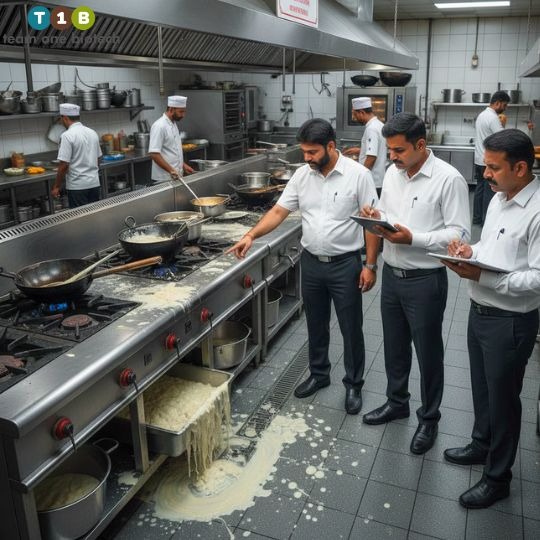
FSSAI and Grease Management Standards
The Food Safety and Standards Authority of India (FSSAI) mandates that all food business operators maintain hygienic premises, which explicitly includes proper waste disposal systems. License renewal can be jeopardized by evidence of poor grease management or environmental violations.
CPCB/SPCB Effluent Discharge Norms
The Central Pollution Control Board and State Pollution Control Boards have established stringent parameters for commercial kitchen effluent. Restaurants discharging wastewater with excessive FOG content face:
- Immediate closure notices
- Fines ranging from ₹25,000 to ₹1,00,000
- Criminal prosecution under the Water (Prevention and Control of Pollution) Act, 1974
Municipal Regulations in Major Cities
Delhi: The Delhi Jal Board requires mandatory grease trap installation for all commercial kitchens, with quarterly maintenance certificates.
Mumbai: The BMC enforces grease trap capacity based on kitchen size, with surprise inspections and heavy penalties for non-compliance.
Bangalore: BBMP regulations specify grease trap design standards and require biological treatment systems for establishments serving more than 50 meals daily.
The Hidden Costs of FOG Neglect

Financial Hemorrhaging You Can’t Afford
Restaurant margins are tight. Every rupee counts. Yet FOG mismanagement creates a cascade of expenses:
Emergency Plumbing Repairs: ₹15,000 to ₹50,000 per incident, often requiring pipe replacement rather than simple clearing.
Downtime Losses: A closed kitchen during lunch or dinner service can mean ₹1-3 lakhs in lost revenue for high-volume establishments.
Pest Infestations: Grease attracts cockroaches, rodents, and flies. Professional pest control contracts cost ₹20,000-40,000 annually, but the reputational damage from a customer posting photos of pests is priceless, in the worst way.
Reputation Damage: In the age of Zomato reviews and Instagram food bloggers, a single hygiene complaint can devastate your business. Studies show that 94% of diners avoid restaurants with poor cleanliness ratings.
Regulatory Fines: Beyond immediate penalties, repeated violations can result in license suspension, forcing complete operational shutdown.
The Environmental Toll
FOG contamination doesn’t just affect your bottom line. When grease enters municipal sewage systems, it:
- Blocks treatment plant machinery, requiring expensive repairs funded by taxpayers
- Reduces the efficiency of biological wastewater treatment
- Contributes to water pollution in rivers and lakes
- Increases the carbon footprint of waste management operations
As consumers become increasingly environmentally conscious, your restaurant’s ecological responsibility becomes a competitive advantage.
Traditional Methods vs. Modern Bioremediation: A Critical Comparison
The Old Guard: Manual Scraping and Chemical Warfare
For decades, restaurants relied on two approaches:
Manual Grease Trap Cleaning: Labor-intensive, messy, and expensive. Requires complete service disruption, generates hazardous waste, and provides only temporary relief.
Chemical Drain Cleaners: Caustic substances that dissolve organic matter but also corrode pipes, harm beneficial bacteria in sewage treatment plants, and create toxic fumes. These products often contain sodium hydroxide and sulfuric acid, substances that violate environmental regulations when discharged untreated.
The Biological Revolution: How Bioremediation Works
Team One Biotech’s biological FOG management represents a paradigm shift. Instead of fighting nature with harsh chemicals, bioremediation harnesses it.
The Science: Specialized bacterial consortia are introduced into grease traps and drainage systems. These microorganisms produce lipase enzymes that break down fats, oils, and grease into water and carbon dioxide, completely natural byproducts.
The Advantages:
- Continuous Action: Unlike manual cleaning, beneficial bacteria work 24/7, preventing buildup rather than reacting to it
- Pipe Preservation: No corrosive chemicals means your plumbing infrastructure lasts longer
- Odor Elimination: Biological digestion neutralizes foul smells at the source
- Environmental Safety: 100% biodegradable, CPCB-compliant solutions
- Cost Efficiency: Reduces cleaning frequency and emergency repairs by up to 70%
Implementing a Comprehensive FOG Management Strategy

Step 1: Assessment and Audit
Every restaurant has unique FOG challenges based on:
- Menu composition and cooking methods
- Kitchen size and equipment layout
- Current grease trap capacity and condition
- Drainage system age and configuration
A professional grease management audit identifies vulnerabilities and creates a customized treatment protocol. Team One Biotech’s audit service includes thermal imaging to detect hidden blockages, capacity calculations, and regulatory compliance verification.
Step 2: Grease Trap Optimization
Modern grease traps are not mere receptacles; they’re biological reactors when properly managed. Key optimization strategies include:
Proper Sizing: Many restaurants have undersized grease traps inherited from previous tenants. FSSAI recommends capacity calculations based on peak meal volume.
Regular Dosing: Biological treatments work best when bacterial populations are maintained through consistent application schedules.
Temperature Management: Beneficial bacteria thrive at 20-40°C. Excessively hot effluent should be tempered before entering the grease trap.
Step 3: Staff Training and Best Practices
Your kitchen team is the first line of defense. Implement these protocols:
- Scrape plates thoroughly before washing to minimize solid food waste entering drains
- Never pour fryer oil directly down drains; collect it for proper disposal or biodiesel conversion
- Use sink strainers to catch food particles
- Schedule strategic dosing of biological treatments during low-volume periods for maximum effectiveness
Step 4: Preventive Maintenance Schedule
Transition from reactive crisis management to proactive prevention:
- Weekly: Visual inspection of grease trap levels and drain flow rates
- Monthly: Biological treatment application and surface skimming
- Quarterly: Professional cleaning and bacterial culture refresh
- Annually: Complete system audit and regulatory compliance documentation
Team One Biotech: Your Partner in Sustainable Kitchen Management
While this guide provides the knowledge framework, implementation requires the right products and expertise. Team One Biotech has pioneered biological wastewater solutions specifically formulated for the Indian hospitality sector.
Key Differentiators:
- Formulations tested in India’s harshest kitchen environments
- CPCB-certified and FSSAI-compliant
- Technical support from environmental engineers who understand Indian cuisine
- Proven ROI with payback periods of 6-9 months
Real Results: Case Study Snapshot
A 200-seat fine-dining restaurant in South Mumbai was facing ₹40,000 monthly plumbing costs and had received two MPCB violation notices. After implementing Team One Biotech’s comprehensive FOG management program:
- 90% reduction in emergency plumbing calls
- Complete elimination of odor complaints
- ₹4.2 lakhs annual savings on maintenance costs
- Full regulatory compliance achieved within 60 days
- Kitchen efficiency improved with zero drain-related downtime
The Future Is Biological: Making the Transition
The hospitality industry is at an inflection point. Regulatory pressure is intensifying. Customer expectations for environmental responsibility are rising. Operational costs demand optimization.
Biological FOG management isn’t a trend, it’s the new standard. Forward-thinking restaurant operators recognize that investing in proper grease management protects their most valuable assets: their reputation, their profitability, and their license to operate.
The question isn’t whether to adopt bioremediation, but how quickly you can implement it before the next crisis strikes.
From Crisis Management to Competitive Advantage
FOG management will never be the glamorous part of restaurant operations. But it’s the foundation that allows everything else to function. When your drains flow freely, your kitchen runs smoothly. When your grease traps are biologically optimized, you’re not just avoiding disasters, you’re building long-term resilience.
In a competitive market where margins are razor-thin and reputation is everything, can you afford to gamble with outdated FOG management approaches?
The restaurants that thrive in the next decade will be those that embraced biological solutions, achieved regulatory excellence, and turned environmental responsibility into a brand differentiator.
The choice is yours. The solution is proven. The time is now.
Looking to improve your ETP/STP efficiency with the right bioculture?
Talk to our experts at Team One Biotech for customised microbial solutions.
Contact: +91 8855050575
Email: sales@teamonebiotech.com
Visit: www.teamonebiotech.com
Discover More on YouTube – Watch our latest insights & innovations!-
Connect with Us on LinkedIn – Stay updated with expert content & trends!